Our Vision

Grameen America envisions an inclusive society in which all entrepreneurs, regardless of gender, race, or income, have access to fair and affordable financial services to support upward economic mobility. 


Our Mission

Grameen America is dedicated to helping low-income entrepreneurial women build businesses to enable financial mobility.

Our History 

Founded in Queens, NY, in 2008, Grameen America builds on the legacy and proven model of Nobel Peace Prize Laureate Muhammad Yunus. His revolutionary but simple idea that all people can lift themselves out of poverty through their own entrepreneurial spirit has dramatically altered how the world views global poverty. 

Our Services

Grameen America provides access to affordable business capital by offering first-time loans starting at no more than $2,500. As part of the program, members receive financial education, peer support, and make weekly loan deposits. We also report loan repayments to major credit bureaus, enabling our members to build their financial mobility.

Who We Serve

Our target population is women living in underserved communities, for whom the mainstream financial system is currently out of reach. Our members are women who previously had few options for accessing capital and most lacked bank accounts and credit scores.


Our Founder

Professor Muhammad Yunus

Professor Yunus, the “father of microfinance,” founded the Grameen Bank in Bangladesh on the premise that the poor are creditworthy. In 2006, Professor Yunus and the Grameen Bank were jointly awarded the Nobel Peace Prize “for their efforts to create economic and social development from below.” Professor Yunus is only one of six people in history to receive the Nobel Peace Prize, Presidential Medal of Freedom and Congressional Gold Medal. Professor Yunus published his work on microfinance and social business in his books Banker to the Poor, Creating a World Without Poverty, and Building Social Business.

 
Untitled-3.jpg
 

The Urgent Need

2 out of every 3 jobs in America are created by small businesses. Yet without access to capital, it is nearly impossible for under-resourced entrepreneurs to launch a business, sustain a business, and find a path to financial resiliency for themselves and their families.

Across the U.S. economy, one challenge shows up again and again: capable entrepreneurs and households face small but critical gaps in liquidity—moments when access to affordable capital determines whether progress continues, stalls, or happens at all.

When Grameen America invests in an entrepreneur, not just with capital, but with trust, it changes everything.


7 Million

7 million families live below the federal poverty line in the U.S..

30%

of low-income neighborhoods are credit invisible.

16%

Women own 42% of U.S. businesses but receive only 16% of conventional business loans

40%

40% of Americans have less than $500 in savings.


A Holistic Pathway to Financial Independence

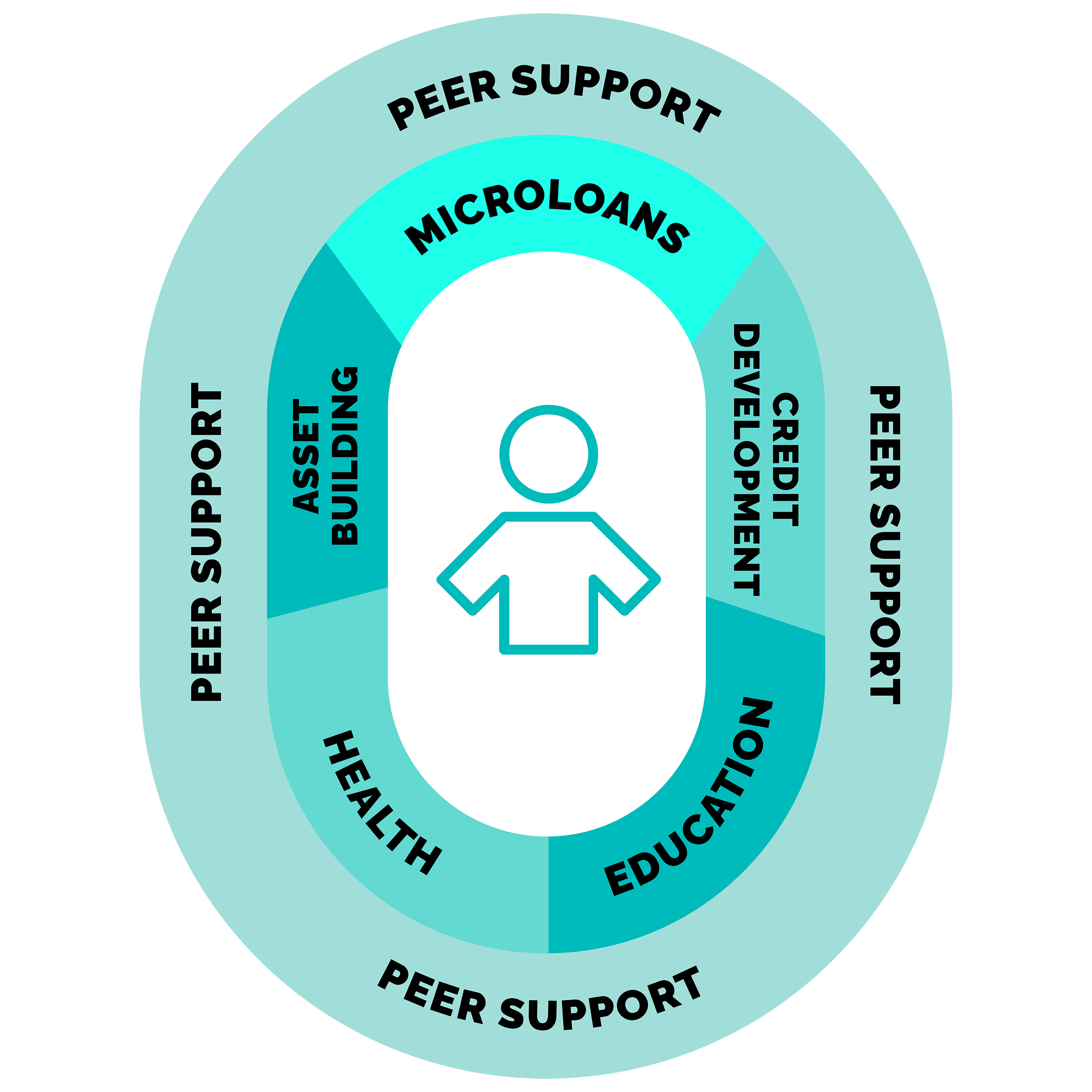
Grameen America’s trust-based model is member-first, putting the whole entrepreneur at the center and offering comprehensive and critical access to capital, peer support, credit development, asset-building, education, and health.


Microloans

Grameen America expands access to capital for small business owners by offering first-time and ongoing loans to start or grow a small business. Grameen America loans are not contingent on collateral or credit scores, replacing traditional underwriting with trust and peer support. When initial loans are repaid, members are eligible for larger loans, allowing them to continue to grow their businesses while building their liquidity and financial identities.

Peer Support

Each week, Grameen America entrepreneurs gather in small groups, they gather in community — planning, saving, learning, repaying their loans, building and strengthening trusting relationships, mentoring one another, and holding one another accountable. It transforms neighbors, friends, and believers in each other’s success into trusted support systems.

Credit Development

While institutions generally evaluate creditworthiness based on past behavior, Grameen America’s approach focuses on future actions, including our members’ commitment to attend weekly meetings and repay their loans on time. By reporting those repayments to major credit bureaus, we help members build positive credit histories and expand future opportunities. By redefining what it means to be creditworthy and leading with trust, Grameen America shows that opportunity and follow-through can open doors to greater financial stability and long-term economic mobility.


Asset Building

We promote personal savings as a foundation for financial mobility and generational wealth, helping members establish consistent savings habits through an innovative savings solution.

Education

Financial literacy helps close gaps in knowledge that lead to higher personal, financial and business success. Grameen America provides education at key points throughout an entrepreneur’s journey in the program, from before their first microloan to ongoing support during membership, covering topics such as budgeting, taxes, credit, savings, marketing, cash flow, business planning, and more.

Health

To help improve health outcomes, Grameen America’s Community Health Program, powered by Community Health Workers, provides small business owners with health system navigation and referrals, health education, and chronic disease screenings.

 
Untitled-3.jpg

Our Unique Model


1.

Five entrepreneurs in a community form a small peer group. 


2.

Each entrepreneur undergoes 5 days of financial, business, and program training.


3.

Each entrepreneur receives an individual loan no larger than $2,500, and commits to supporting other group members, sharing accountability, and repaying together on a six-month schedule.


4.

Groups meet weekly with trained, trusted, and community-based field employees.


5.

When initial loans are repaid, members are eligible for larger loans to grow their businesses; build financial identities, assets, and credit scores; and continue their access to peer networks, comprehensive financial services, and education.